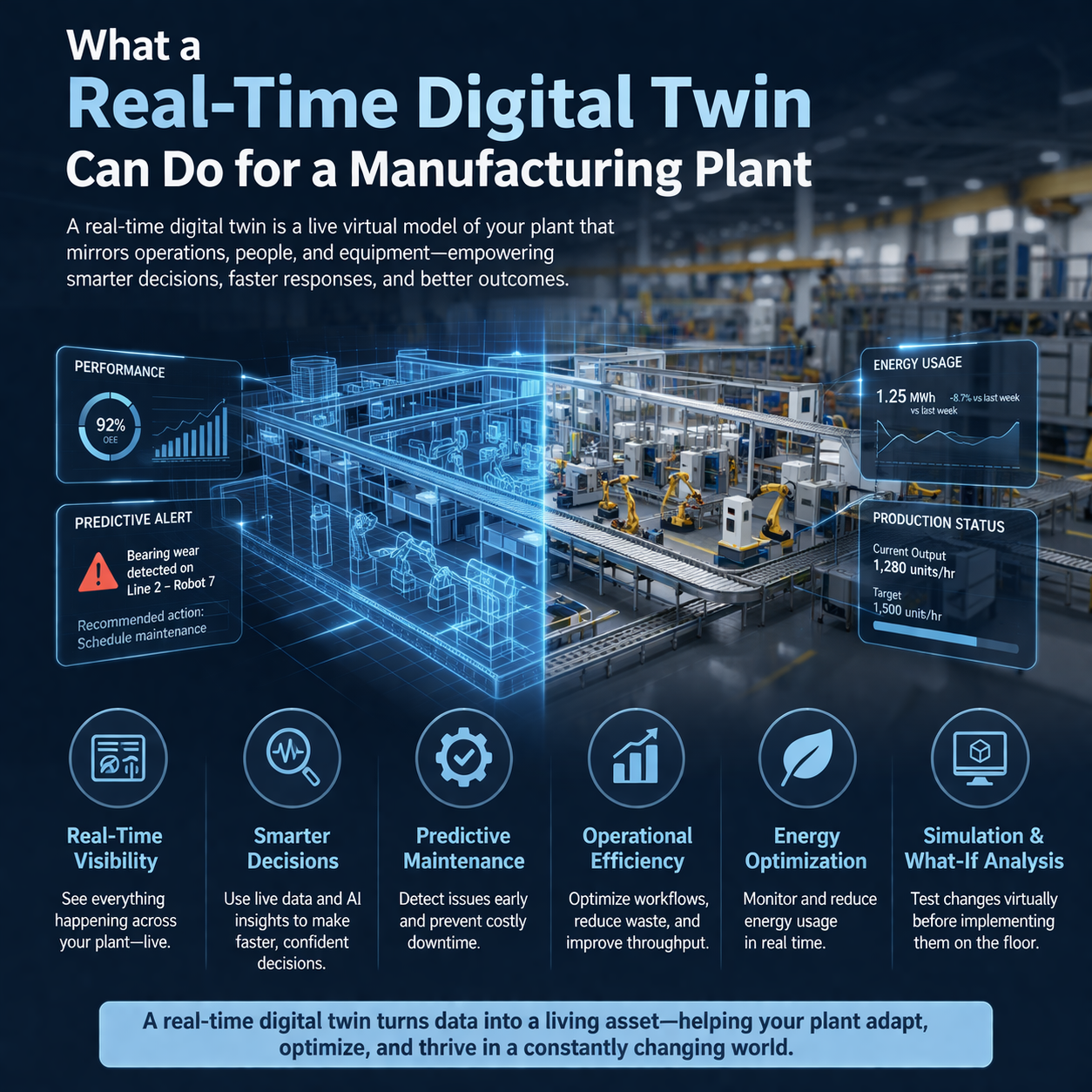
As manufacturing evolves toward smarter, more connected operations, the concept of a real-time digital twin is rapidly gaining traction. A digital twin is a virtual replica of a physical asset, process, or entire facility that is continuously updated using real-time data. For manufacturing plants, this technology is transforming how operations are monitored, analyzed, and optimized.
Understanding the Digital Twin Concept
A digital twin integrates data from sensors, machines, and control systems to create a dynamic digital model of the plant. Unlike static simulations, a real-time digital twin reflects the current state of operations, enabling manufacturers to visualize processes, identify inefficiencies, and make informed decisions instantly.
By bridging the gap between the physical and digital worlds, digital twins provide a comprehensive view of the entire production ecosystem.
Real-Time Visibility and Control
One of the most powerful advantages of a digital twin is real-time visibility. Plant managers can monitor machine performance, production flow, energy consumption, and system health from a centralized dashboard. This level of transparency helps in quickly identifying bottlenecks or abnormalities that could disrupt operations.
With real-time insights, decision-makers can take immediate corrective actions, minimizing downtime and maintaining consistent productivity.
Predictive Maintenance and Reduced Downtime
Unexpected equipment failures are a major cause of production interruptions. A real-time digital twin uses continuous data streams and advanced analytics to detect early warning signs of potential failures. By analyzing patterns such as vibration, temperature, and load variations, the system can predict when a machine is likely to fail.
This enables maintenance teams to act proactively, scheduling repairs before breakdowns occur—reducing downtime and extending equipment lifespan.
Process Optimization and Efficiency Gains
Digital twins allow manufacturers to simulate different production scenarios without disrupting actual operations. For example, plant managers can test changes in production schedules, machine configurations, or material flow within the virtual environment.
This capability helps in identifying the most efficient processes, reducing waste, and improving overall throughput. Over time, these incremental improvements lead to significant cost savings and higher operational efficiency.
Enhanced Decision-Making
Data-driven decision-making is at the core of modern manufacturing. A real-time digital twin consolidates data from multiple sources and presents it in an actionable format. This empowers leadership teams to make faster, more accurate decisions based on real-world conditions rather than assumptions.
Whether it’s optimizing resource allocation, adjusting production plans, or improving quality control, digital twins provide the insights needed to act with confidence.
Improved Safety and Compliance
Manufacturing environments often involve complex machinery and high-risk operations. A digital twin can enhance safety by monitoring critical parameters and triggering alerts when conditions exceed safe limits. In some cases, automated responses can be initiated to prevent accidents.
Additionally, maintaining digital records of operations helps in ensuring compliance with industry regulations and audit requirements.
Enabling the Future of Smart Manufacturing
Real-time digital twins are a cornerstone of Industry 4.0 initiatives. When integrated with technologies like IoT, AI, and cloud computing, they create a connected ecosystem where machines, systems, and people work in harmony.
As adoption grows, digital twins will become essential for manufacturers aiming to stay competitive in a rapidly changing landscape.
Conclusion
A real-time digital twin is more than just a visualization tool—it’s a strategic asset that drives efficiency, reliability, and innovation. By providing real-time insights, enabling predictive maintenance, and supporting smarter decision-making, digital twins empower manufacturing plants to operate at peak performance. Investing in this technology is no longer a luxury but a necessity for businesses looking to thrive in the digital age.
Leave a Reply