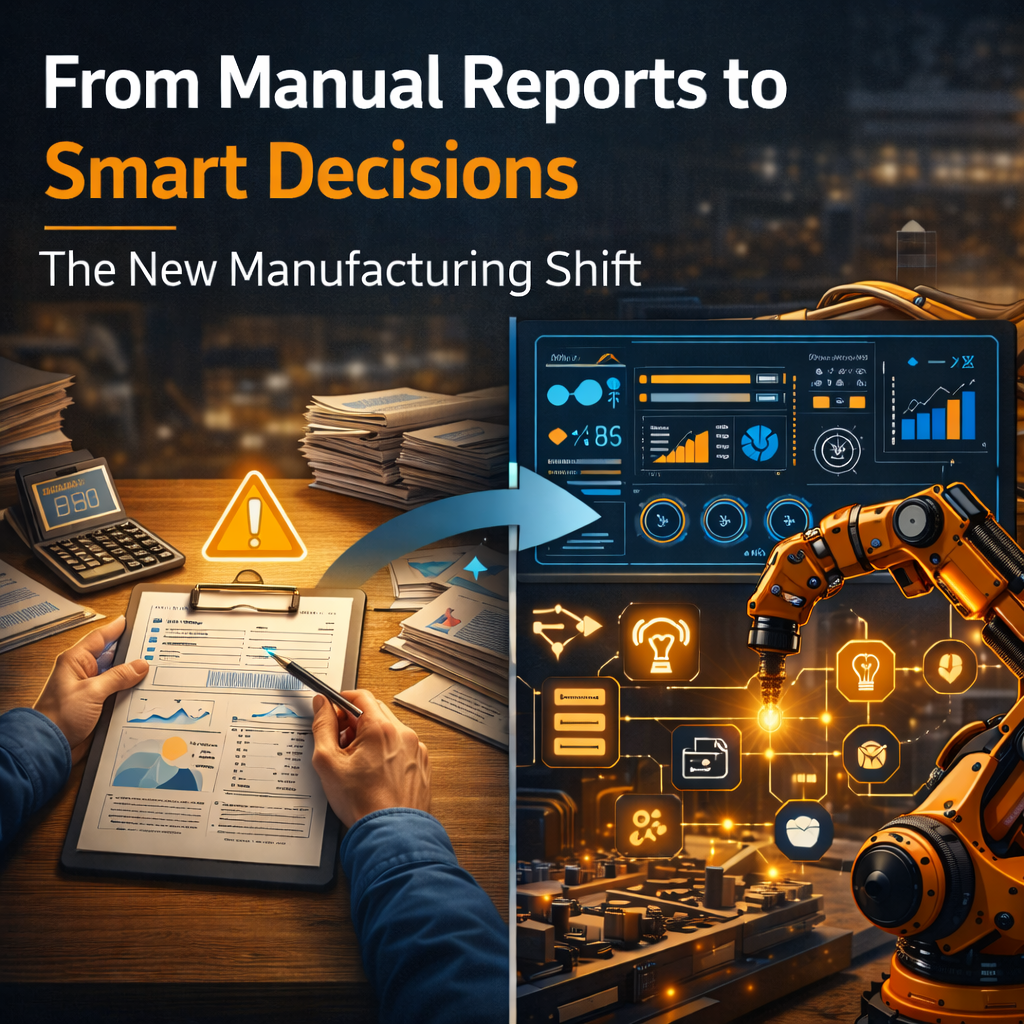
The manufacturing industry is undergoing a fundamental transformation. For decades, factories relied heavily on manual reporting—paper logs, spreadsheets, and delayed data entry—to track operations and performance. While these methods once served their purpose, they are no longer sufficient in today’s fast-paced, data-driven environment. The shift from manual reports to smart, real-time decision-making is redefining how modern manufacturing operates.
The Limitations of Manual Reporting
Manual reporting processes are often time-consuming, error-prone, and reactive. Data is typically recorded after events occur, which means decision-makers are always a step behind. This delay can lead to missed opportunities, inefficiencies, and increased operational risks.
Additionally, manual systems lack consistency. Human errors, incomplete data, and disconnected records make it difficult to gain accurate insights. As manufacturing becomes more complex, relying on outdated reporting methods can hinder growth and competitiveness.
The Rise of Smart Manufacturing
Smart manufacturing leverages technologies such as Artificial Intelligence (AI), Industrial IoT (IIoT), and advanced analytics to automate data collection and enable real-time insights. Instead of waiting for reports, manufacturers can now access live dashboards that provide a complete view of operations at any given moment.
Machines, sensors, and systems are interconnected, continuously generating data that can be analyzed instantly. This transition allows organizations to move from reactive problem-solving to proactive decision-making.
Real-Time Data: The Game Changer
The biggest advantage of this shift is real-time data availability. With smart systems in place, manufacturers can monitor production, equipment performance, and resource utilization as it happens.
For example, if a machine shows signs of inefficiency or failure, alerts can be triggered immediately, allowing teams to take action before the issue escalates. This reduces downtime, improves productivity, and enhances overall efficiency.
From Data to Decisions
Collecting data is only the first step—the real value lies in transforming that data into actionable insights. Smart systems use analytics and machine learning to identify patterns, predict outcomes, and recommend actions.
This enables decision-makers to:
- Optimize production schedules
- Improve quality control
- Reduce waste and energy consumption
- Enhance workforce productivity
Instead of relying on assumptions or outdated reports, decisions are now backed by accurate, real-time data.
Improving Efficiency and Competitiveness
The shift to smart decision-making offers significant benefits:
- Faster Response Times: Immediate insights lead to quicker actions
- Reduced Costs: Efficient resource utilization lowers operational expenses
- Higher Quality Output: Continuous monitoring ensures consistency
- Scalability: Digital systems can easily adapt to growing demands
In a competitive global market, these advantages can make a critical difference in maintaining and expanding market share.
Overcoming Challenges
Transitioning from manual to digital systems does come with challenges, including initial investment, system integration, and workforce training. However, the long-term benefits far outweigh these obstacles.
Manufacturers must adopt a strategic approach—starting with key processes, implementing scalable solutions, and upskilling employees to work alongside advanced technologies.
Conclusion
The move from manual reports to smart decisions is not just a technological upgrade—it is a cultural and operational shift. It empowers manufacturers to become more agile, efficient, and data-driven.
As the industry continues to evolve, those who embrace this transformation will be better positioned to innovate and compete. The future of manufacturing lies in intelligent systems that turn data into decisions—and decisions into success.
Leave a Reply