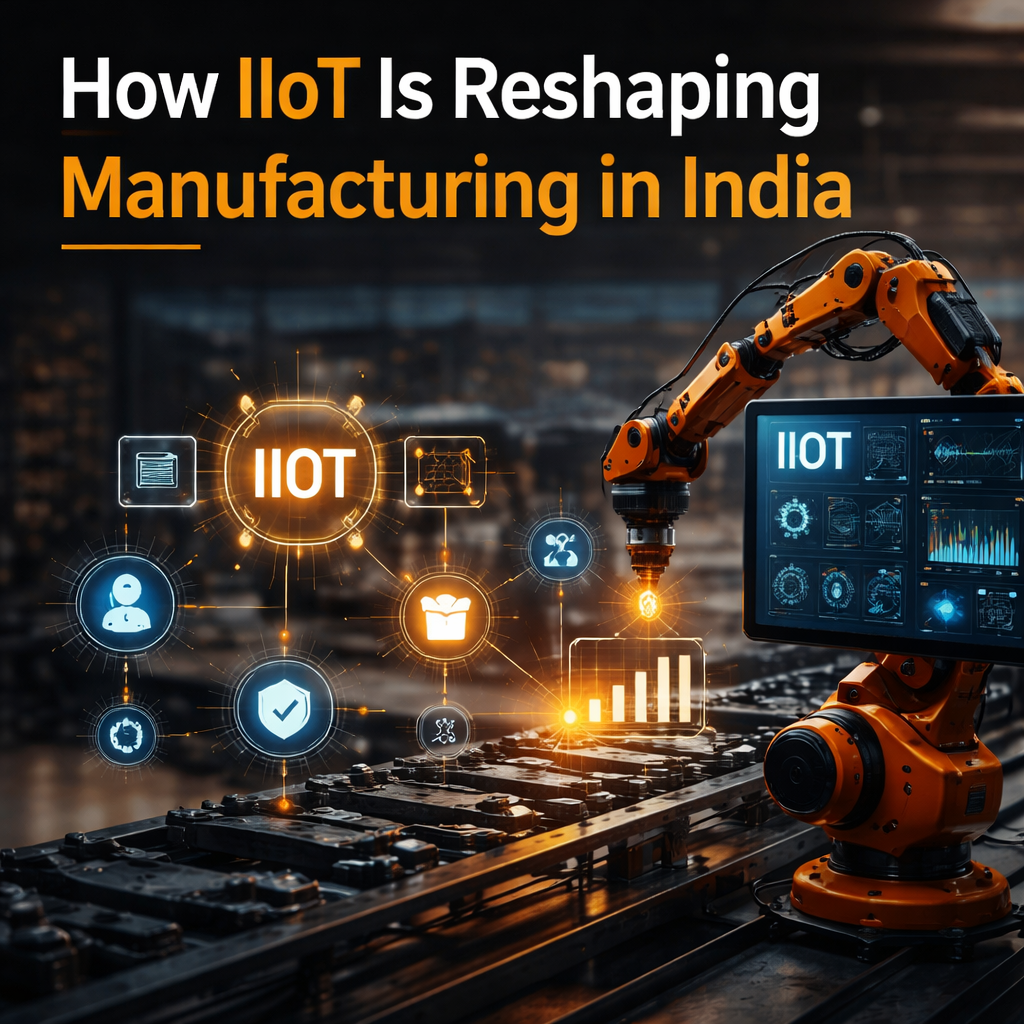
India’s manufacturing sector is undergoing a significant transformation, driven by the rapid adoption of digital technologies. At the heart of this evolution lies the Industrial Internet of Things (IIoT), a powerful enabler that is redefining how factories operate, make decisions, and deliver value. As industries move toward smarter and more connected ecosystems, IIoT is playing a crucial role in reshaping manufacturing across the country.
What is IIoT?
The Industrial Internet of Things (IIoT) refers to a network of interconnected devices, machines, and sensors that collect and exchange data in real time. These connected systems provide manufacturers with deep visibility into their operations, enabling data-driven insights and automation.
Unlike traditional manufacturing setups, where processes are often siloed, IIoT integrates machines, systems, and workflows into a unified digital environment. This connectivity allows organizations to monitor, analyze, and optimize their operations with unprecedented precision.
Driving Smart Manufacturing in India
India’s push toward becoming a global manufacturing hub has accelerated the adoption of IIoT. With initiatives like Make in India, manufacturers are increasingly investing in smart technologies to enhance productivity and competitiveness.
IIoT empowers factories to transition from reactive operations to proactive and predictive systems. Real-time monitoring of equipment, production lines, and energy consumption enables manufacturers to identify inefficiencies and take corrective action instantly.
Key Ways IIoT is Transforming Manufacturing
- Real-Time Monitoring and Visibility
IIoT provides continuous insights into machine performance, production output, and operational efficiency. This transparency allows managers to make faster and more informed decisions. - Predictive Maintenance
One of the most impactful applications of IIoT is predictive maintenance. By analyzing sensor data, manufacturers can detect potential equipment failures before they occur, reducing downtime and maintenance costs. - Improved Operational Efficiency
IIoT helps streamline processes by identifying bottlenecks and optimizing workflows. Automated data collection eliminates manual errors and enhances overall productivity. - Energy Management
With rising energy costs, efficient consumption is critical. IIoT-enabled systems monitor energy usage in real time, helping organizations reduce waste and improve sustainability. - Enhanced Safety and Compliance
Connected devices can monitor environmental conditions, worker safety, and equipment status. This ensures compliance with safety standards and minimizes workplace risks. - Supply Chain Optimization
IIoT extends beyond the factory floor to improve supply chain visibility. Real-time tracking of materials and shipments enables better planning and reduces delays.
Benefits for Indian Manufacturers
- Increased productivity and reduced downtime
- Better quality control and reduced defects
- Lower operational and maintenance costs
- Improved decision-making through data insights
- Enhanced competitiveness in global markets
Challenges in IIoT Adoption
Despite its advantages, implementing IIoT comes with challenges:
- Integration with legacy systems
- High initial investment
- Data security and privacy concerns
- Need for skilled workforce
To overcome these challenges, manufacturers must adopt a phased approach, invest in training, and implement robust cybersecurity measures.
The Role of Intelligent Solutions
Solution providers are playing a key role in enabling IIoT adoption by offering customized, scalable solutions. From machine monitoring and digital twins to energy analytics and fleet management, these solutions help manufacturers seamlessly integrate IIoT into their operations.
Conclusion
IIoT is not just a technological upgrade—it is a fundamental shift in how manufacturing operates. By connecting machines, data, and people, IIoT is enabling Indian manufacturers to become more agile, efficient, and competitive.
As the industry continues to evolve, embracing IIoT will be essential for organizations aiming to thrive in a digital-first world. The future of manufacturing in India is smart, connected, and data-driven—and IIoT is leading the way.
Leave a Reply