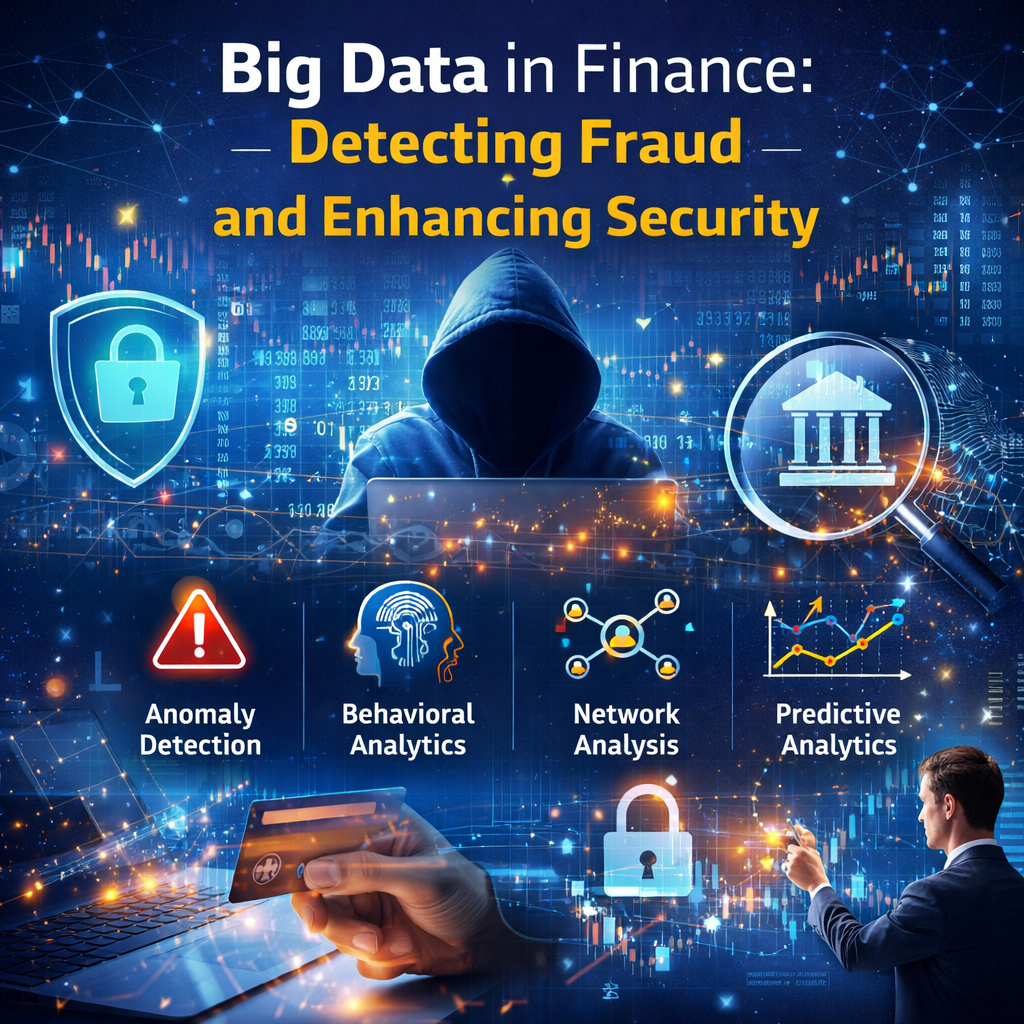
In the rapidly evolving financial landscape, the volume, velocity, and variety of data have grown exponentially. From digital transactions and online banking to mobile payments and trading platforms, financial institutions generate massive amounts of data every second. This surge has given rise to Big Data, a powerful asset that is transforming how organizations detect fraud and strengthen security.
Understanding Big Data in Finance
Big Data refers to extremely large and complex datasets that traditional data processing tools cannot efficiently handle. In the financial sector, this includes transaction records, customer behavior data, credit histories, market feeds, and even unstructured data such as emails and social media interactions.
By leveraging advanced analytics, Artificial Intelligence (AI), and Machine Learning (ML), financial institutions can analyze these datasets in real time to uncover patterns, anomalies, and potential threats.
The Growing Threat of Financial Fraud
As digital adoption increases, so do the risks associated with cybercrime and financial fraud. Fraudsters continuously evolve their tactics, making traditional rule-based detection systems less effective. Common types of financial fraud include:
- Credit card fraud
- Identity theft
- Money laundering
- Phishing and cyberattacks
Detecting these threats requires more than static rules—it demands intelligent, data-driven systems capable of adapting to new patterns.
How Big Data Enables Fraud Detection
- Real-Time Transaction Monitoring
Big Data technologies allow financial institutions to monitor transactions in real time. By analyzing millions of transactions instantly, systems can flag suspicious activities such as unusual spending patterns, location mismatches, or high-value transfers. - Anomaly Detection
Machine learning models trained on historical data can identify deviations from normal behavior. For example, if a user suddenly initiates transactions from a different country or device, the system can trigger alerts or block the transaction. - Behavioral Analytics
Big Data enables the creation of detailed customer profiles based on behavior patterns. These profiles help detect fraud by comparing current activities with established norms, making it easier to identify unauthorized actions. - Network Analysis
Fraud often involves networks of interconnected entities. Big Data tools can analyze relationships between accounts, transactions, and devices to detect suspicious networks and uncover complex fraud schemes like money laundering. - Predictive Analytics
Predictive models use historical data to forecast potential fraud risks. This proactive approach allows institutions to prevent fraud before it occurs, rather than reacting after the damage is done.
Enhancing Security with Big Data
Beyond fraud detection, Big Data plays a crucial role in strengthening overall financial security:
- Advanced Authentication: Multi-factor authentication systems use data insights to verify user identity more effectively.
- Risk Scoring: Transactions and users are assigned risk scores based on multiple data points, enabling better decision-making.
- Cybersecurity Monitoring: Continuous data analysis helps detect cyber threats, unauthorized access, and system vulnerabilities.
- Regulatory Compliance: Big Data assists in meeting compliance requirements by ensuring transparency, traceability, and accurate reporting.
Benefits for Financial Institutions
Implementing Big Data solutions offers several advantages:
- Faster and more accurate fraud detection
- Reduced financial losses
- Improved customer trust and experience
- Enhanced operational efficiency
- Better compliance with regulations
Challenges to Consider
Despite its benefits, adopting Big Data in finance comes with challenges:
- Managing large and complex datasets
- Ensuring data privacy and security
- High implementation costs
- Integration with legacy systems
To overcome these challenges, organizations must invest in scalable infrastructure, robust data governance, and skilled professionals.
Conclusion
Big Data is revolutionizing the financial industry by enabling smarter fraud detection and stronger security frameworks. With the ability to analyze vast datasets in real time, financial institutions can stay ahead of evolving threats and protect both their assets and customers.
As fraud becomes more sophisticated, the role of Big Data will only grow in importance. Organizations that embrace data-driven strategies today will be better equipped to build secure, resilient, and future-ready financial systems.
Leave a Reply