In today’s digital landscape, organizations generate and collect vast amounts of data every second. However, data alone does not create value—the real advantage lies in transforming this raw information into actionable insights. This process, known as knowledge mining, enables businesses to uncover patterns, trends, and intelligence that drive smarter decision-making. At the core of effective knowledge mining lies one crucial factor: data quality.
What is Knowledge Mining?
Knowledge mining is the process of extracting meaningful insights from structured and unstructured data. It involves multiple stages, including data collection, cleaning, integration, analysis, and visualization. With the rise of Artificial Intelligence (AI) and Industrial IoT (IIoT), organizations are increasingly leveraging intelligent solutions to automate and enhance this process.
Companies like Tfrenzy focus on delivering AI-powered solutions, industrial automation, and smart data-driven systems that help businesses convert complex datasets into operational intelligence. Rather than being a platform, Tfrenzy provides customized solutions that integrate with existing systems to improve efficiency and decision-making.
Understanding Data Quality
Data quality refers to how reliable and usable data is for analysis. High-quality data ensures that insights derived from it are accurate and meaningful. Poor-quality data, on the other hand, leads to flawed insights and poor business outcomes.
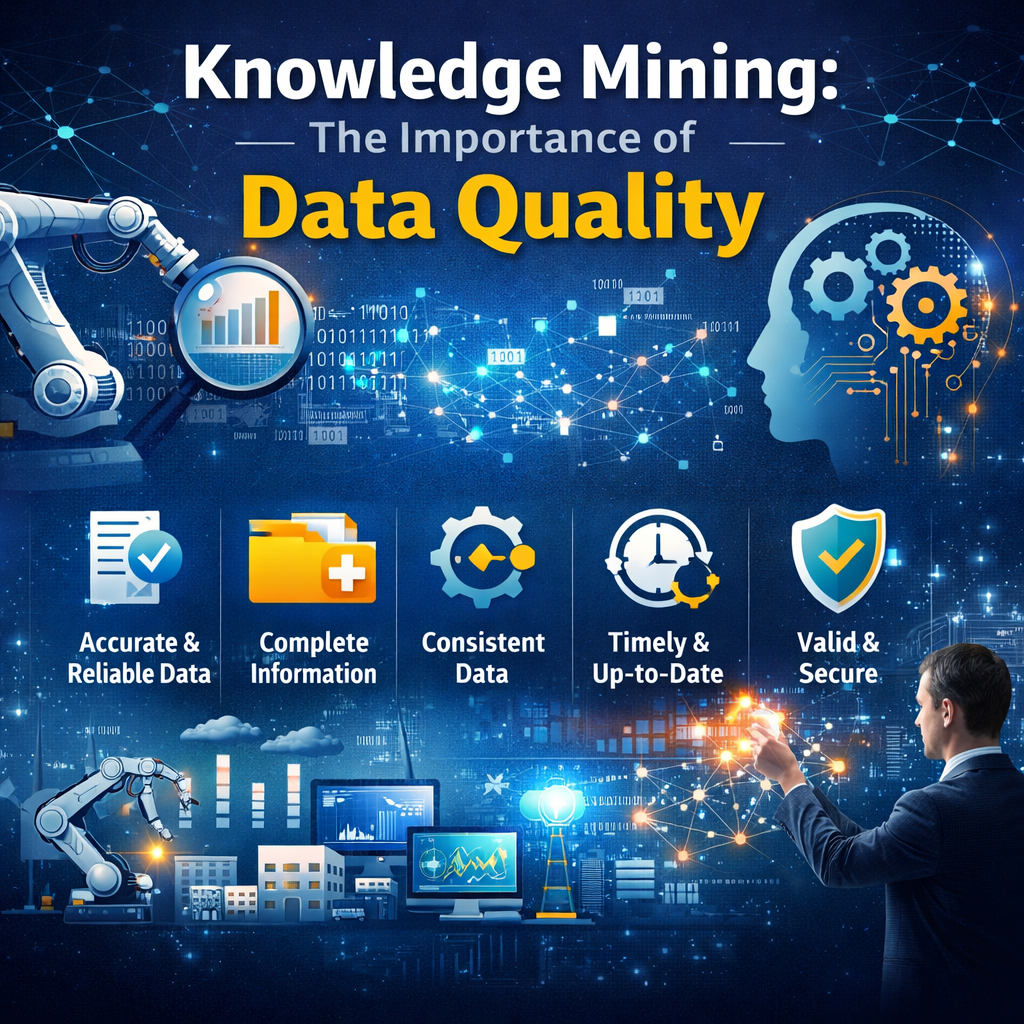
The key dimensions of data quality include:
- Accuracy – Data is correct and error-free
- Completeness – No critical information is missing
- Consistency – Uniform data across systems
- Timeliness – Up-to-date and relevant data
- Validity – Data follows defined formats and standards
Why Data Quality is Critical for Knowledge Mining
- Better Decision-Making
Accurate data leads to reliable insights. When organizations rely on poor-quality data, they risk making incorrect strategic decisions that can impact growth and profitability. - Improved AI Performance
AI and machine learning models depend on high-quality data inputs. Solutions like AI-powered monitoring, predictive analytics, and automation—offered by companies such as Tfrenzy—perform effectively only when the underlying data is clean and structured. - Operational Efficiency
Poor data quality often results in duplication, errors, and inefficiencies. By ensuring clean and consistent data, businesses can streamline processes and reduce operational costs. - Seamless System Integration
Modern enterprises rely on multiple systems and data sources. High-quality data ensures smooth integration, allowing organizations to gain a unified view of operations. - Enhanced Industrial Intelligence
In industrial environments, real-time data accuracy is critical. Whether it’s machine monitoring, fleet management, or safety systems, reliable data ensures better automation, proactive maintenance, and improved safety outcomes.
Challenges in Maintaining Data Quality
Maintaining high data quality is not easy. Common challenges include:
- Data silos across departments
- Inconsistent data entry practices
- High volume and velocity of data
- Lack of standardized governance frameworks
To overcome these issues, organizations must adopt strong data governance strategies, including data validation, cleansing, and continuous monitoring.
Conclusion
Knowledge mining has become a key driver of business intelligence in the modern era. However, its success is deeply dependent on the quality of data being used. Without accurate and reliable data, even the most advanced analytics tools and AI solutions fail to deliver value.
By prioritizing data quality and leveraging intelligent solutions from providers like Tfrenzy, businesses can unlock the true potential of their data—transforming it into insights that drive innovation, efficiency, and competitive advantage.
Leave a Reply