Maintaining safety compliance on the shopfloor is a top priority for manufacturing and industrial organizations. With complex operations, heavy machinery, and human involvement, ensuring that every safety protocol is followed consistently can be challenging. Traditional safety practices—such as manual supervision and periodic audits—often fall short in preventing violations in real time. This is where AI-powered safety monitoring is transforming the landscape.
The Challenge of Shopfloor Compliance
Industrial environments are dynamic, fast-paced, and prone to human error. Workers may unintentionally skip safety steps, neglect personal protective equipment (PPE), or operate machinery incorrectly under pressure. Supervisors, despite their best efforts, cannot monitor every corner of the facility at all times.
Non-compliance not only increases the risk of accidents but also exposes organizations to regulatory penalties, production delays, and reputational damage. To address these challenges, businesses are turning to intelligent, automated solutions.
What is AI-Powered Safety Monitoring?
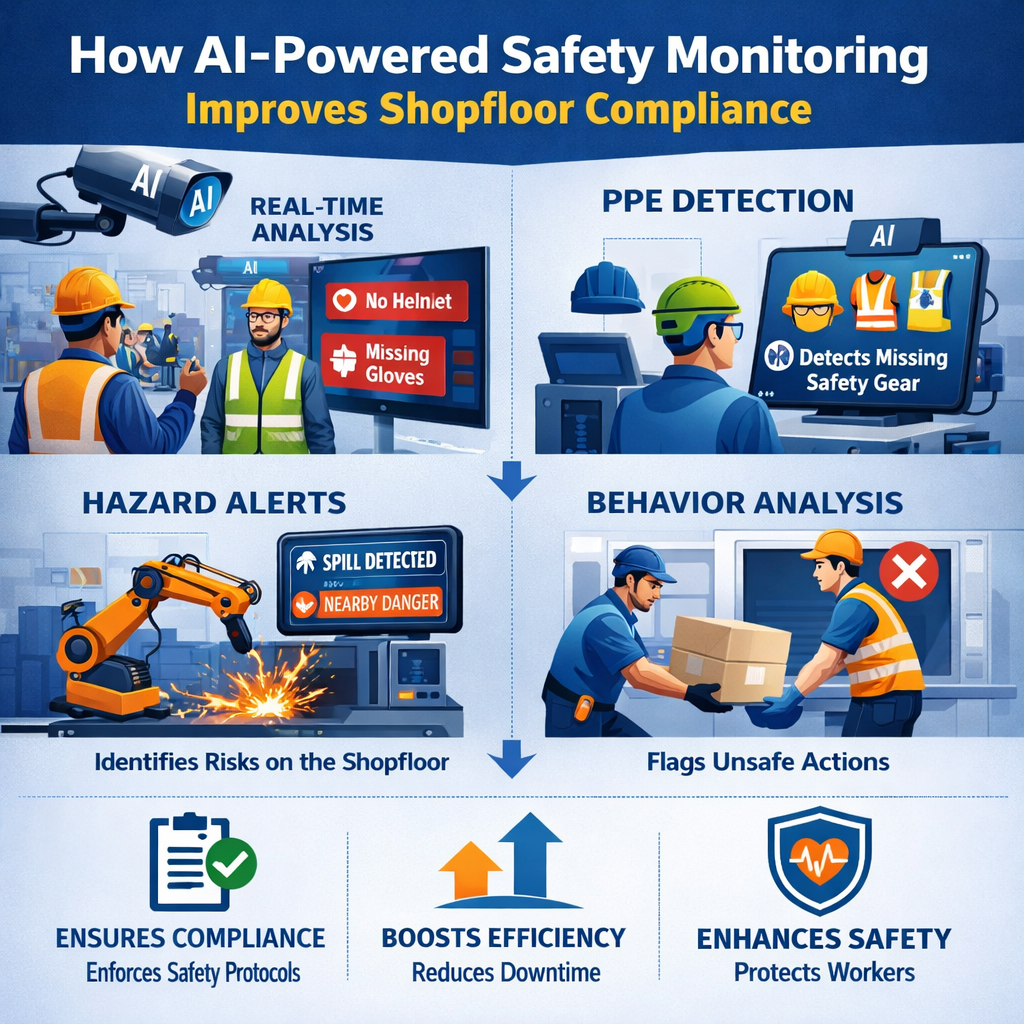
AI-powered safety monitoring uses computer vision, machine learning, and IoT-enabled sensors to observe and analyze shopfloor activities in real time. Cameras and sensors capture live data, while AI algorithms detect unsafe behaviors, violations, or potential hazards instantly.
These systems can identify whether workers are wearing helmets, gloves, or safety vests, detect unauthorized access to restricted zones, and monitor adherence to standard operating procedures—all without human intervention.
Real-Time Detection and Instant Alerts
One of the biggest advantages of AI-driven monitoring is its ability to provide real-time alerts. If a worker enters a hazardous area without proper PPE or if unsafe behavior is detected, the system can immediately notify supervisors or trigger alarms.
This instant feedback loop helps correct issues on the spot, significantly reducing the likelihood of accidents and ensuring continuous compliance with safety standards.
Reducing Human Dependency and Bias
Manual monitoring is not only labor-intensive but also subject to inconsistencies and bias. AI systems, on the other hand, operate continuously with high accuracy and objectivity. They do not get fatigued or overlook violations, ensuring consistent enforcement of safety protocols across all shifts.
This allows safety officers to focus more on strategic improvements rather than routine supervision.
Data-Driven Safety Insights
Beyond real-time monitoring, AI systems collect and analyze large volumes of safety-related data. Organizations can gain insights into recurring violations, high-risk zones, and behavioral patterns on the shopfloor.
These insights enable companies to implement targeted training programs, redesign workflows, and strengthen safety policies. Over time, this leads to a proactive safety culture rather than a reactive one.
Improving Compliance and Audit Readiness
AI-powered systems automatically log safety events, violations, and corrective actions. This creates a digital audit trail that simplifies compliance reporting and regulatory inspections. Organizations can demonstrate adherence to safety standards with accurate, real-time data rather than relying on manual records.
This not only reduces administrative burden but also builds trust with regulators and stakeholders.
Enhancing Worker Safety and Productivity
A safer workplace directly contributes to higher productivity. When employees feel secure and protected, they are more focused and efficient. By minimizing accidents and disruptions, AI-powered safety monitoring ensures smoother operations and uninterrupted production.
The Future of Industrial Safety
As industries continue to adopt smart manufacturing practices, AI-driven safety monitoring will become a standard component of shopfloor operations. Integration with other systems—such as digital twins and predictive maintenance platforms—will further enhance its capabilities.
Conclusion
AI-powered safety monitoring is revolutionizing how organizations approach shopfloor compliance. By enabling real-time detection, reducing human dependency, and providing actionable insights, it ensures a safer and more efficient working environment. For manufacturers looking to improve compliance and protect their workforce, investing in AI-driven safety solutions is a smart and necessary step forward.
Leave a Reply