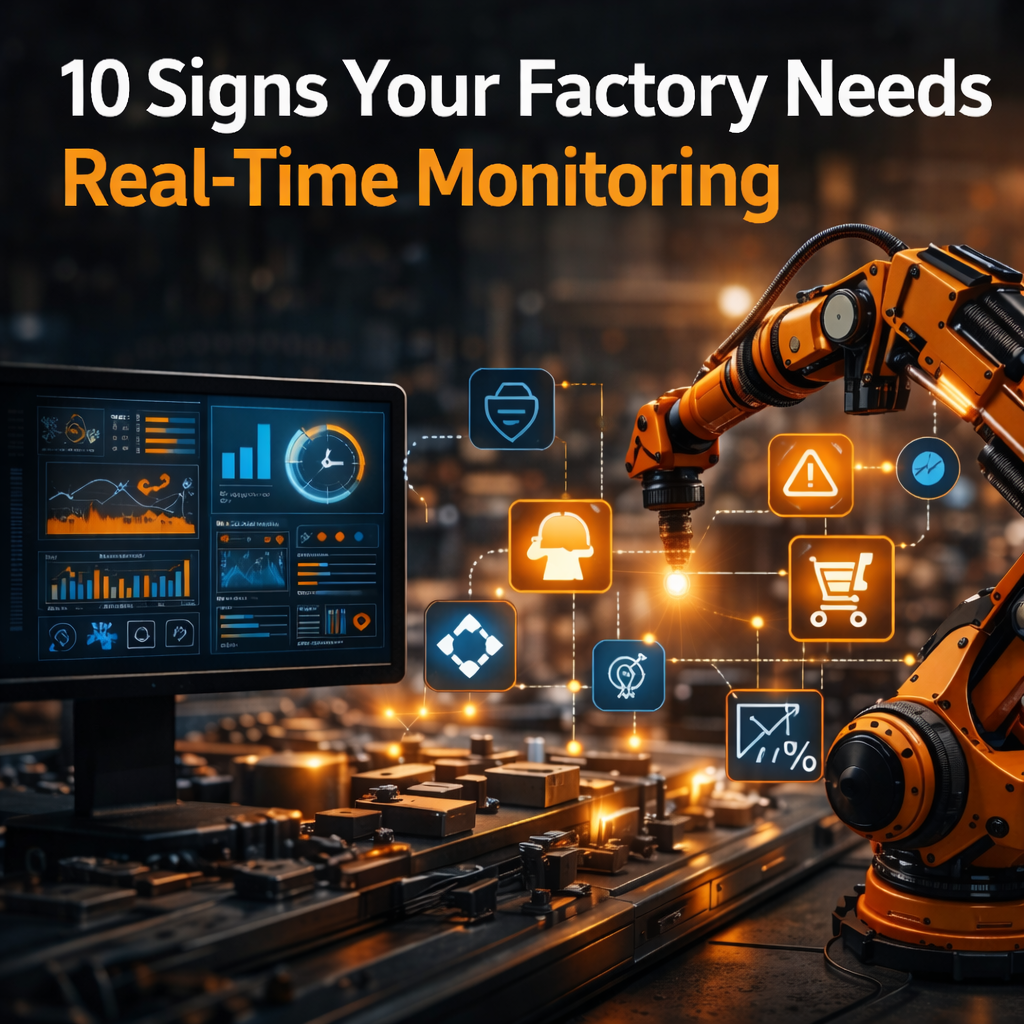
In today’s competitive manufacturing landscape, efficiency, accuracy, and speed are critical to success. However, many factories still rely on outdated systems and manual processes that limit visibility and slow decision-making. Real-time monitoring, powered by advanced technologies like AI and Industrial IoT (IIoT), enables manufacturers to track operations instantly, identify issues early, and optimize performance. If your factory is facing any of the following challenges, it may be time to adopt real-time monitoring.
1. Frequent Unplanned Downtime
Unexpected machine breakdowns disrupt production schedules and lead to costly delays. If downtime is a recurring issue, real-time monitoring can help detect early warning signs and prevent failures through predictive maintenance.
2. Lack of Visibility into Operations
If you cannot access live data on machine performance, production output, or operational efficiency, decision-making becomes reactive rather than proactive. Real-time monitoring provides a clear, up-to-date view of your entire operation.
3. High Maintenance Costs
Relying on reactive maintenance often leads to expensive repairs. Monitoring systems track equipment health continuously, enabling timely interventions that reduce maintenance costs.
4. Inconsistent Product Quality
Variations in product quality often stem from undetected process deviations. Real-time monitoring identifies inconsistencies instantly, ensuring quality standards are maintained.
5. Delayed Decision-Making
When decisions are based on outdated or incomplete data, it can result in inefficiencies. Real-time insights allow managers to respond quickly to changes and optimize production processes.
6. Inefficient Resource Utilization
If energy, materials, or labor are not being used efficiently, it impacts profitability. Monitoring systems provide data-driven insights to optimize resource allocation and reduce waste.
7. Difficulty in Tracking Production Performance
Without accurate performance metrics, it is challenging to measure productivity or identify bottlenecks. Real-time dashboards provide key performance indicators (KPIs) that help improve efficiency.
8. Safety Concerns on the Shop Floor
Workplace safety is a top priority in manufacturing. Real-time monitoring can detect unsafe conditions, equipment malfunctions, or environmental risks, helping prevent accidents.
9. Poor Inventory and Supply Chain Coordination
Lack of real-time data can lead to overstocking or shortages. Monitoring systems improve coordination by providing accurate insights into inventory levels and supply chain activities.
10. Limited Scalability
If your current systems cannot support growth or increased production demands, it’s a sign that modernization is needed. Real-time monitoring enables scalable operations that grow with your business.
Conclusion
Real-time monitoring is no longer a luxury—it’s a necessity for modern manufacturing. By providing instant insights into operations, it helps reduce downtime, improve quality, enhance safety, and drive overall efficiency.
Factories that adopt real-time monitoring gain a significant competitive advantage by becoming more agile, data-driven, and responsive. If your factory is experiencing any of these signs, now is the time to invest in intelligent monitoring solutions and transform your operations for the future.
Leave a Reply