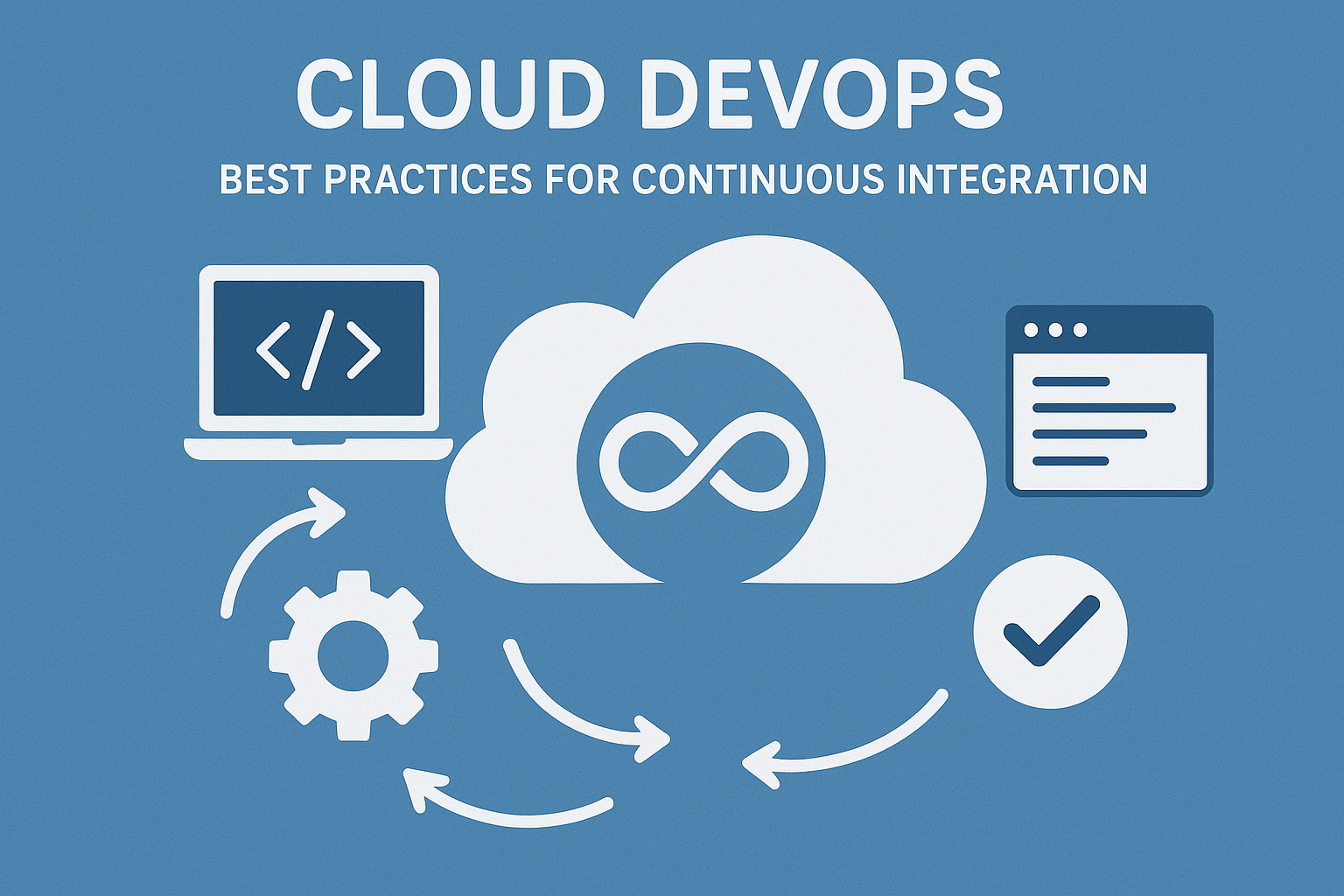
In today’s fast-paced software development world, Continuous Integration (CI) is a staple of agile DevOps methodologies. CI allows teams to automate the integration of code changes, providing quicker releases, better code quality, and reduced integration problems. When combined with cloud-based DevOps tools, CI becomes even more potent, providing scalability, flexibility, and enhanced collaboration. Below are some best practices to adhere to for effective CI in a cloud DevOps setup.
Automate Everything
Automation is the core of CI. From development and test to deployment, automating the whole integration pipeline minimizes human error and accelerates delivery. Utilize cloud-based CI tools such as GitHub Actions, GitLab CI/CD, Jenkins on AWS, or Azure Pipelines to build reproducible, repeatable workflows. Automate not only builds and tests but also notifications, security scans, and rollback processes.
Commit Early, Commit Often
Regular code commits enable the detection of and correction of bugs at an early stage in the cycle. Support small, incremental changes and employ feature branches for separate development. Cloud repositories such as GitHub or Bitbucket support easy cooperation and branch management, facilitating traceability and accountability.
Keep the Build Environment Clean and Consistent
A typical difficulty in CI is “it works on my machine” problems. Cloud-based CI pipelines leverage containerization (e.g., Docker) to provide fixed environments throughout all stages of the CI/CD pipeline. Use IaC tools such as Terraform or AWS CloudFormation to create repeatable, versioned environments and spin up.
Execute Fast and Reliable Testing
Testing is necessary to keep bad code out of production. Engage unit, integration, and smoke tests into your CI pipeline. Make tests speedy and reliable—fail early, and obtain feedback early. Employ parallel testing and caching techniques in order to shorten test execution time.
Monitor and Improve
CI is not a setup once and forget about it—Continuous Improvement. Watch pipeline performance, observe build time, test coverage, and deployment success rate. Most cloud providers provide native dashboards and metrics, which means it is relatively easy to get better and better over time at your pipeline.
Conclusion
Embracing best practices for cloud-based Continuous Integration enables teams to deliver quality software more rapidly and reliably. Through automated processes, collaboration promotion, and taking advantage of cloud power, DevOps teams are able to be ahead in the competitive development process.
Leave a Reply